Showing posts with label denmark. Show all posts

Sunday, 28 October 2018

Sofie den modige pilot

Sofie den modige pilot - Danish edition of Sadie the air mail pilot

New Danish edition of Sadie the Air Mail Pilot from Forlaget Arvids.

Cover lettering based on Ludlow Tempo Heavy Inline.

Buy it here!

Monday, 9 June 2014

Donald Duck’s 80th Anniversary

I’m not sure, but I think Donald Duck’s birthday is a national holiday in Denmark. Here to celebrate the 80th Anniversary of Don’s public debut is a series of tweets from Danish comics scholar, animation expert, and all-round good egg Jakob Stegelmann.

Happy 80th Birthday, Donald Duck. No wiser but still going strong. Thanks to Walt, Ducky, Ben, Jack, Carl etc
– Jakob Stegelmann (@JakobStegelmann) June 9, 2014


The first one: Wise Little Hen, premiered June 9th, 1934
– Jakob Stegelmann (@JakobStegelmann) June 9, 2014


… and his breakthrough moment, The Band Concert, 1935
– Jakob Stegelmann (@JakobStegelmann) June 9, 2014


Jack Hannah was Don’s director in the ’40s. One of his best: Three for Breakfast
– Jakob Stegelmann (@JakobStegelmann) June 9, 2014


… but one of Dons best films is this one by Ben Sharpsteen, 1936. Beware! Flying knives!
– Jakob Stegelmann (@JakobStegelmann) June 9, 2014


… and Carl Barks wrote and storyboarded this 1941-Classic
– Jakob Stegelmann (@JakobStegelmann) June 9, 2014


Donald Duck 80: great comic book cover. Barks took Don to the next level.
– Jakob Stegelmann (@JakobStegelmann) June 9, 2014


Donald Duck 80: This 1945 Jack Kinney-directed short is the strangest Don-cartoon ever made: Duck Pimples
– Jakob Stegelmann (@JakobStegelmann) June 9, 2014


… and Barks did some weird things to Donald in the comics too, like Bombie the Zombie 1949
– Jakob Stegelmann (@JakobStegelmann) June 9, 2014


Donald Duck 80: Let's not forget the first great comic artist to take Donald from screen to print: Al Taliaferro.
– Jakob Stegelmann (@JakobStegelmann) June 9, 2014


Donald Duck 80: Academy Award-anti-nazi Duck: Der Fuehrer's Face
– Jakob Stegelmann (@JakobStegelmann) June 9, 2014


Donald Duck 80: the one and only film appearance of Cousin Gus (fætter Guf) for @catobagger
– Jakob Stegelmann (@JakobStegelmann) June 9, 2014


Why not end Donald's 80th celebration with a hot number? Mr.Duck Steps Out. Long live the King of Ducks…
– Jakob Stegelmann (@JakobStegelmann) June 9, 2014

Monday, 2 June 2014

A pair of Danish sea serpents


Here’s a painting just finished for Danish publisher Arvids, a cover for an upcoming book. It was my first acrylic painting after a very long break from the medium – over three years I think. I found it an uncomfortable struggle to begin with, but by the end I was enjoying painting again, and sea monsters are always a pleasure!

Wednesday, 1 January 2014

In praise of the everyday

Hyldest til Hverdagen is by Danish writer Dan Turèll. A version with music by Halfdan E is included on the album Pas På Pengene.  Here’s my translation:

In Praise of the Everyday (Hyldest til Hverdagen)
by Dan Turèll

I’m fond of the everyday
most of all I’m fond of the everyday
The slow awakening to the familiar view
that all the same is never quite so familiar
the family’s at once both intimate and after sleep’s distance unfamiliar faces

morning kisses
the smack of the post landing in the hall
the smell of coffee
the ritual wandering to the shop around the corner
after milk, cigarettes, newspapers –
I’m fond of the everyday even through all its irritations
the bus that clatters outside in the street
the telephone that incessantly disturbs the loveliest blankest standing-still nothing in my aquarium
the birds that chirp from their cage
the old neighbour who looks in
the kid who has to be fetched from nursery just as one is getting going
the constant shopping list in the jacket pocket
with its steady demand for meat, potatoes, coffee and crackers
the quick little one at the local
when we all meet with the shopping bags and wipe the sweat from our brows -
I’m fond of the everyday
the daily agenda
also the biological
the unavoidable procedures of bath and toilet
the obligatory shaver
the letters that must be written
the rent demand
balancing the chequebook
the washing up
the recognition of having run out of nappies or tape -
I’m fond of the everyday
not in opposition to festivity and colour, high times and hullaballoo
have that as well
with all of its leftover cinders
so much unsaid and approximated
floating and hanging in the air afterwards
like some species of psychic hangover
only everyday’s morning coffee can cure -
fine enough with parties! There’s all the room for euphoria! Let the thousand pearls bubble!
but what happiness it is afterwards to lay yourself down
in rest’s and everyday’s bed
with the familiar
all the same not quite so familiar
same view.

I’m fond of the everyday
I’m wild about it
stop the clock I’m so fond of the everyday
I’m so stinking fond of the everyday . . .


The above is based on the Danish CD booklet. Other published versions are less sparing with the punctuation. This translation first appeared on the blog in April 2009 as part of a longer post.

Homage to the Everyday copyright © The Estate of Dan Turèll.

Wednesday, 27 March 2013

Looking for Parrot’s long lost mother


Following on from an earlier post, here’s a Brockhampton Press semi-strip book featuring Bruin, or as he’s known in the original Danish, Rasmus Klump. This little book is in the same small horizontal two-colour format as the Peter Pan book seen recently on Michael Sporn’s Splog.


Published in 1959, Bruin the Deep Sea Diver was the third Bruin book in this format. The back cover lists two other titles, Bruin Sets Sail and Bruin is Shipwrecked.


The book begins by concluding the previous volume’s shipwreck story. In Bruin is Shipwrecked, he and his crew were washed off the deck of the good ship Mary in a storm and came ashore on an island populated by turtles. Thinking the Mary was lost, they decided to make a new ship, a paddle boat fashioned out of a hollow log. Now, setting off to circumnavigate the island they find the Mary safe and sound, but with a stranger aboard.

In the Danish book series, all this is included in the shipwreck book, Rasmus Klump på Skilpaddeøen, rather than the diving book, Rasmus Klump som dykker.


These stories were originally published as a daily comic strip, and all he book collections are abridged, leaving out some panels. This little book skips quite a few, but even so I won’t reproduce the whole thing here.


I’ve scanned the following pages in higher resolution: one, two and three, four and five, six and seven, eight and nine, ten and eleven, twelve and thirteen, fourteen and fifteen. This brings us up to the proper end of the shipwreck story, and to the point where the Danish version of the diving story begins.


But wait, on page fourteen something very exciting occurs! Despite the book leaving out so many panels, it manages to include an event missing from the Danish books, namely the first appearance of Parrot as an egg, and the only appearance of Parrot’s mother!


But who is this parrot, you ask? Well, throughout their adventures, Bruin (Rasmus), Pingo, Percy the pelican (Pelle), and the old salt Wilmot (Skæg), are accompanied by the little ones (de små), a little turtle (Pilskadden) who only speaks its own turtle language, and the turtle’s little friend. In the first few stories the turtle’s friend is a frog (Frømand), and then in Rasmus Klump som dykker the turtle and frog suddenly produce a small pram, out of which eventually comes a baby parrot (Gøjen). Shortly afterwards the frog, a male like most characters in the strip, meets a female frog and leaves the crew, so for the later books the little ones are the turtle and the parrot.

All the stories feel like an imaginative play session between three children, Bruin, Pingo, and Percy, with the little ones being a pair of lively toddlers sometimes playing in parallel and sometimes joining in the main action, and Wilmot as an indulgent adult who sometimes plays along, but is quite distracted and would just as soon have a nap while the game continues.

So, for readers of the Danish books, it’s long seemed quite mysterious the way Parrot appeared out of the pram. But having seen two drawings of Parrot’s mother, I wondered were there any more? Google have recently put online scans of several years worth of back issues of the Glasgow Evening Times, and in its pages, starting with the issue of February 8th 1954, we can find the complete early newspaper strips in translation.


Here then is the complete appearance of Parrot’s mother, three panels published in the Evening Times on Saturday August 13th, 1955, and below a further view of the egg before it’s tucked in by turtle, from the following monday’s issue.


Finally, a quick look at my very battered old copy of Rasmus Klump som dykker, with the pram first appearing on page two, and Parrot popping out much later in the book.


One day perhaps we’ll see these stories reprinted unabridged. The easy pace of the original stories are still perfect for young children, and for older readers who like sharing some of their adventures before having forty winks.

Rasmus Klump copyright © Egmont Serieforlaget.

Tuesday, 22 January 2013

Twit Archive 16-30 September 2011


Above, Turner’s The Shipwreck, from 1805, via the Google Art Project selection of paintings from Tate Britain.

Below, more art tweets, animation, comics, books and music tweets, Danish elections, Libya, Yemen, Bahrain, Afghanistan, Niger, and sewers in London and New York.

Thursday, 17 January 2013

Twit Archive 12-21 June 2011


Below the fold: tweets on Syria, Iran, Lybia, Afghanistan, Bahrain, and in the UK, Brian Haw and alternative medicine.

Also Danish silent comedians, Swedish cinema, and quite a bit of animation, including Otto Messmer, creator of Felix the Cat.

Above, Otto lends Felix a hand in Comicalamities, (1928) to the sound of The Real Tuesday Weld covering Abba’s The Day Before You Came.

Wednesday, 10 October 2012

There will never be another like you

Der vil aldrig blive en anden som dig
by Dan Turèll


There will never be another like you, never another like you. Never. Although there will be many, I know that, here where we part. There will be many. Many to walk hand in hand with along the beach. Many to meet in bars in the early hours. Many to go home with, or to take home and lie sweating or gasping over or under. And sweat and gasp will be the same, but there will never be another like you. Never another like you.


To love of you, to love you, I love you still. I loved you long. I have loved you so long. I have loved you as long as I can remember. I will love you for all time to come. I would have loved you still. I would have could ought should love you, longer yet. Always. Even the simplest grammar you make ominous.


There will never be another like you. There will be others. And a lot could happen between me and them. Maybe I will marry others. Breed children and buy a house with others. Sit and eat breakfast and have coffee, toast, and orange juice at the kitchen table every morning with others. And watch TV programmes in the evening together with others. But all the same I will never be able to forget you.


There will never be another like you. Never another like you. You who are now sitting at another breakfast table. With coffee and toast, after lying gasping under another last night, another who maybe doesn’t even know how well toasted you want your bread. And I will always long for you. And always try to picture to myself where you are now. How you look in this moment. And what you’re doing.

There will never be another like you, I know that, here where we part. And in that way you’ll always be there.


_

Copyright © the estate of Dan Turèll. The translation is my own.

Images: the first and last are from Bo Bedre’s Idébog by Ellen Bisgaard, © Forlaget Palle Fogtdal 1967, and the second, third and fourth are from Danmarks Bygningskultur (Vol. 2) by Harald Langberg, Gyldendalske Boghandel - Nordisk Forlag 1955. 

Saturday, 8 September 2012

US Navy Privateer down - Baltic Sea, April 1950


The Danish daily Politiken, Wednesday the 12th of April 1950.

This selection of Danish newspaper clippings come from a scrapbook I bought some years ago in a Copenhagen antiquarian bookshop. They concern the search operation for a US Navy Privateer plane shot down over the Baltic Sea near Latvia on the 8th of April 1950 by Soviet aircraft. There’s a brief account of the event at spyflight.co.uk.

In 1956 the United States accused the Soviet Union of holding a number of airmen prisoner from the crew of the US Navy Privateer shot down in 1950 and from the crew of an Air Force B-29 list in the Sea of Japan on June 13th 1952 (see TFR 27-86 here). The Soviet Union denied this (see TFR 27-8).

In 1975 the Pentagon acknowledged the plane was on an intelligence mission, not a training flight as originally claimed. AP reported US Navy officials as saying that there was ‘no credible evidence’ that any of the crew escaped the plane and ended up in Soviet prison camps.

Speculation revived in June 1992 after comments by Russian President Boris Yeltsin to NBC News that American prisoners of war from Vietnam were sent to Soviet labor camps and some might still be alive. Later that month US envoy Malcom Toon in Russia following up reports of missing Americans expressed doubt about Yeltsin’s comments, but in November 1992 Russian emissary Dimitri Volkogonov presented a letter from President Yeltsin to the US Senate Select Committee on POW-MIA Affairs stating that the USSR under Stalin had executed some American prisoners after World War II, and forced others to renounce their citizenship. Dimitri Volkogonov also talked of more than 730 US airmen being imprisoned in the Soviet Union, some of whom were executed.

The lost crew were Jack Fette, Howard W Seeschaf, Robert D Reynolds, Tommy L Burgess, Frank L Beckman, Joe H Danens, Jack W Thomas, Joseph J Bourassa, Edward J Purcell, and Joseph N Rinnier Jr.

Here’s a 1956 news story on the reaction of the remarried wife of Howard W Seeschaf to claims that he might be alive.

And here’s a 1994 story on Jane Reynolds Howard, remarried wife of Lt Robert Reynolds, who was told in 1958 that her first husband was still alive by a man who said he was a former cellmate of Reynolds’ in a Soviet psychiatric hospital. And another from 1997, still searching.

Thursday, 26 January 2012

IQ light


The IQ light is a modular lampshade that my father, Holger Strøm, designed in the early 1970s when he was working at the Kilkenny Design Workshops in Ireland.

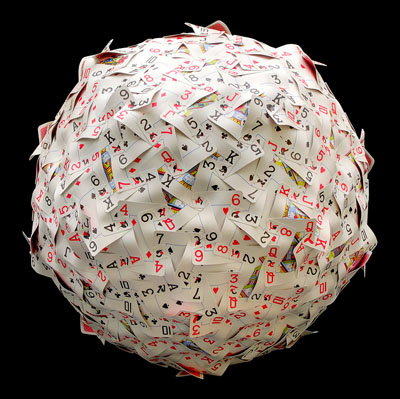
You wouldn’t be wrong in guessing that he has a fondness for Buckminster Fuller, not just in relation to geometry, but also the pleasure in designing an object that achieves much with little. There’s an element of play in this pleasure, and I think he would enjoy the playing card sphere below.


Poker Cards Sphere by Nick Sayers. 270 poker playing cards slotted together (exactly five packs of cards including the jokers). Inspired by Holger Strøm’s IQ light system. See more of Nick’s spherical sculptures on Flickr.

IQlight® copyright © 1973 and 2000 Holger Strøm.
Poker Cards Sphere copyright © 2011 all rights reserved by Nick Sayers.

Thursday, 10 November 2011

Three Strøms


My grandfather Alfred Charles Strøm, his brother Clarence Victor
Christian Strøm, and their sister Helen Gerda Strøm.

Tuesday, 13 September 2011

Mother on Mars

Monday, 12 September 2011

Snow and dust


Monday, 8 November 2010

Current

Thursday, 4 November 2010

Tuesday, 2 November 2010

Following my father


From recent days and nights on the island of Bornholm. Photo by S.

Sunday, 24 October 2010